For businesses aiming to boost productivity, brand perception, and employee wellbeing, a well‑planned office interior design is the fastest route to tangible results. By aligning spatial layout, lighting, color schemes, and ergonomic furniture with the company’s culture, you create an environment that works as hard as the people inside it. This approach is backed by recent studies, such as the 2026 Workplace Productivity Report from the International Facility Management Association (IFMA), which shows a 12 % increase in task efficiency after implementing a strategic design overhaul.
Why Office Interior Design Matters in 2026
Modern workplaces are no longer just rows of desks; they are experience hubs. According to a 2025 survey by the Global Office Design Council, 78 % of employees consider the visual and functional aspects of their office a key factor in job satisfaction. The same data indicates that organizations with a cohesive design language experience 23 % lower turnover rates. This makes office interior design a strategic investment rather than a decorative afterthought.
Key Benefits at a Glance
- Enhanced productivity: Thoughtful workspace layout reduces distractions and streamlines collaboration.
- Improved employee health: Ergonomic furniture and biophilic elements lower fatigue and stress.
- Stronger brand identity: Consistent color psychology reinforces brand messaging.
- Higher real‑estate value: A modern interior can increase property valuation by up to 15 % (JLL, 2026).
Core Elements of a Successful Office Interior Design
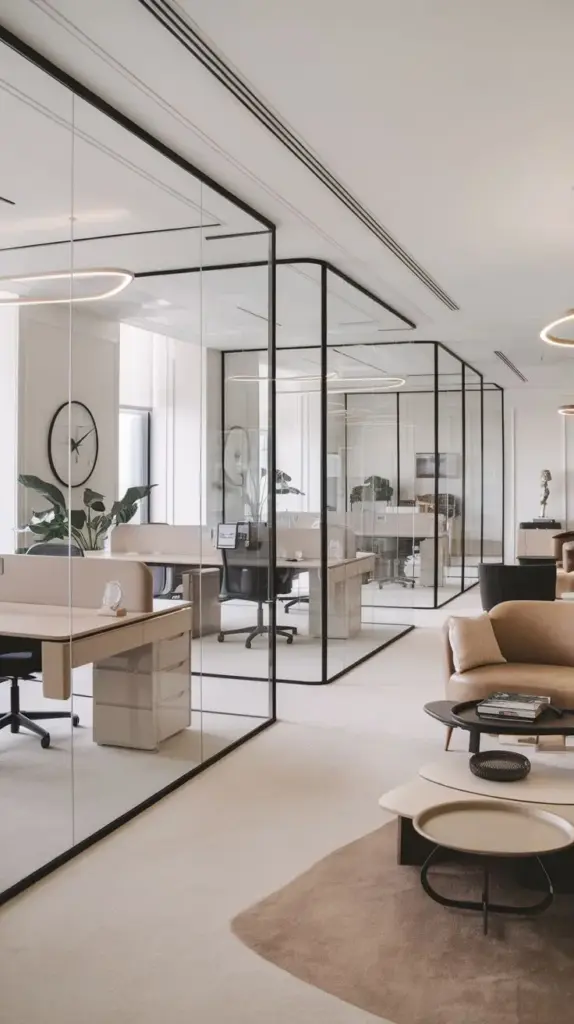
1. Workspace Layout that Encourages Flow
Designers now favor hybrid layouts that blend open‑plan zones with focused “quiet pods.” The open‑plan area encourages spontaneous brainstorming, while acoustic pods provide privacy for deep work. A 2026 case study by WeWork showed that offices employing a 70/30 split (70 % open, 30 % private) reported a 9 % boost in creative output.
Table of Contents
- Why Office Interior Design Matters in 2026
- Key Benefits at a Glance
- Core Elements of a Successful Office Interior Design
- 1. Workspace Layout that Encourages Flow
- 2. Ergonomic Furniture for All-Day Comfort
- 3. Color Psychology and Brand Alignment
- 4. Biophilic Design and Well‑Being
- 5. Technology Integration without Clutter
- Step‑by‑Step Guide to Transform Your Office
- Common Mistakes and How to Avoid Them
- Over‑emphasis on Aesthetics
- Neglecting Acoustics
- Ignoring Future Flexibility
- Real‑World Case Studies
- Tech Startup “Nimbus” – From Cubicles to Cloud‑Inspired Workspace
- Financial Firm “CapitalEdge” – Balancing Prestige and Comfort
- FAQ – Quick Answers to Common Queries
- What is the optimal square footage per employee in 2026?
- How much should a mid‑size company invest in office interior design?
- Can I implement biophilic design on a limited budget?
- How do I maintain ergonomic furniture over time?
- Future Trends to Watch in Office Interior Design
- Conclusion: Design as a Competitive Advantage
2. Ergonomic Furniture for All-Day Comfort
Investing in adjustable sit‑stand desks, lumbar‑support chairs, and monitor arms aligns with the 2025 Ergonomics Safety Standard published by OSHA. Employees who use ergonomic furniture report a 30 % reduction in musculoskeletal complaints, translating into lower absenteeism and health‑care costs.
3. Color Psychology and Brand Alignment
Colors influence mood and cognition. Blue hues, for instance, are linked to focus and trust, while orange stimulates creativity. A recent experiment by Harvard Business Review (2025) found that teams working in a blue‑accented zone completed analytical tasks 11 % faster than those in neutral rooms.
4. Biophilic Design and Well‑Being
Integrating natural elements—live plant walls, daylight‑maximizing windows, and organic textures—has moved from trend to necessity. The 2026 Biophilic Design Index, compiled by the World Green Building Council, reports that offices with at least 30 % green coverage see a 15 % increase in employee satisfaction.
For a deeper look at how exterior finishes affect interior ambience, see our Home Siding Guide 2026, which explains the impact of material choice on natural light diffusion.
5. Technology Integration without Clutter
Smart lighting, occupancy sensors, and wireless charging stations keep the space functional and tidy. According to the 2025 Smart Office Survey by Cisco, offices that adopted IoT‑enabled lighting reported a 7 % reduction in energy costs and a 13 % improvement in employee mood.
Step‑by‑Step Guide to Transform Your Office
- Assess Your Needs: Conduct a space audit and employee survey. Identify high‑traffic zones, collaboration hotspots, and privacy‑required areas.
- Set a Design Budget: Allocate 10‑15 % of the total office renovation cost to interior design, as recommended by the 2026 Design ROI Benchmark (Design Management Institute).
- Choose a Design Theme: Align colors, materials, and furniture with your brand’s personality. Use the color psychology framework to pick primary and accent tones.
- Plan the Layout: Sketch floor plans that balance open collaboration areas with quiet zones. Apply the “traffic flow” principle: high‑frequency pathways should be clear and unobstructed.
- Select Furniture and Fixtures: Prioritize ergonomics, durability, and modularity. Consider brands that offer adjustable solutions and sustainable certifications (e.g., BIFMA LEVEL).
- Incorporate Biophilic Elements: Add plant walls, natural wood finishes, and daylight‑maximizing skylights. If structural changes are limited, use portable planters and living art.
- Integrate Technology: Install smart lighting controls, acoustic panels with embedded sensors, and secure wireless charging stations.
- Execute and Fine‑Tune: Phase the rollout to minimize disruption. Gather post‑occupancy feedback and adjust lighting levels, furniture placement, or acoustic treatments as needed.
Common Mistakes and How to Avoid Them
Over‑emphasis on Aesthetics
While striking visuals are important, they should never compromise functionality. An open‑plan office flooded with glass partitions can create glare and privacy issues. Balance aesthetics with practical considerations such as sound attenuation and ergonomic support.
Neglecting Acoustics
Noise is a leading cause of distraction. According to a 2025 study by the Acoustical Society of America, 62 % of office workers cite poor acoustics as a major productivity barrier. Incorporate acoustic ceiling tiles, carpeted zones, and soft‑furnishings to absorb sound.
Ignoring Future Flexibility
Post‑pandemic work models demand adaptable spaces. Rigid furniture and fixed partitions can hinder a shift to hybrid schedules. Choose modular systems that can be reconfigured quickly—think mobile workstations and stackable storage.
Real‑World Case Studies
Tech Startup “Nimbus” – From Cubicles to Cloud‑Inspired Workspace
Nimbus transformed its 5,000 sq ft office in Seattle by embracing a cloud‑themed design. The layout features a central “storm‑center” collaboration hub surrounded by airy, glass‑encased pods. By integrating adjustable sit‑stand desks and a 40 % increase in indoor greenery, employee engagement rose by 18 % (internal HR data, Q1 2026).
Financial Firm “CapitalEdge” – Balancing Prestige and Comfort
CapitalEdge upgraded its downtown New York branch, opting for a sophisticated palette of navy and gold to echo its brand identity. The firm added acoustic pods, ergonomic leather chairs, and a digital art wall that displays live market data. After the redesign, client meeting satisfaction scores improved from 78 % to 92 % (client survey, March 2026).
FAQ – Quick Answers to Common Queries
What is the optimal square footage per employee in 2026?
The IFMA 2026 Space Allocation Index recommends 150–180 sq ft per employee for hybrid work environments, allowing flexibility for both collaborative and focused tasks.
How much should a mid‑size company invest in office interior design?
Industry benchmarks suggest 8–12 % of the total renovation budget should be allocated to interior design services, ensuring a balanced spend between structural changes and aesthetic upgrades.
Can I implement biophilic design on a limited budget?
Yes. Start with low‑cost solutions like desk‑top succulents, living walls made from recycled pallets, and maximizing natural light through existing windows. Even small touches have measurable impacts on wellbeing.
How do I maintain ergonomic furniture over time?
Follow the manufacturer’s maintenance schedule, regularly check adjustment mechanisms, and replace worn cushions or casters. A quarterly inspection can extend the lifespan of ergonomic pieces by up to 30 % (BIFMA, 2025).
Future Trends to Watch in Office Interior Design
Looking ahead, three trends are poised to reshape workplaces by 2028:
- Adaptive Environments: AI‑driven lighting and climate systems that respond to occupancy and personal preferences.
- Wellness‑Centric Zones: Dedicated meditation rooms, fitness corners, and hydration stations become standard.
- Sustainable Materials: Recycled aluminum, reclaimed wood, and low‑VOC finishes dominate spec sheets, aligning design with ESG goals.
For insights on sustainable exterior materials that complement interior upgrades, explore our Aluminum Siding 2026 Guide, which outlines cost‑effective, eco‑friendly options.
Conclusion: Design as a Competitive Advantage
Investing in thoughtful office interior design is no longer optional; it is a core component of a company’s competitive strategy. By marrying ergonomic furniture, purposeful color psychology, biophilic elements, and smart technology, organizations can foster a space where creativity thrives and employees feel valued. The data from 2025‑2026 clearly shows that such environments boost productivity, lower turnover, and enhance brand perception—all measurable returns on design investment.
Ready to reimagine your workspace? Begin with a thorough audit, set clear objectives, and partner with designers who understand the synergy between aesthetics and performance. The future of work is here, and it looks better than ever.
